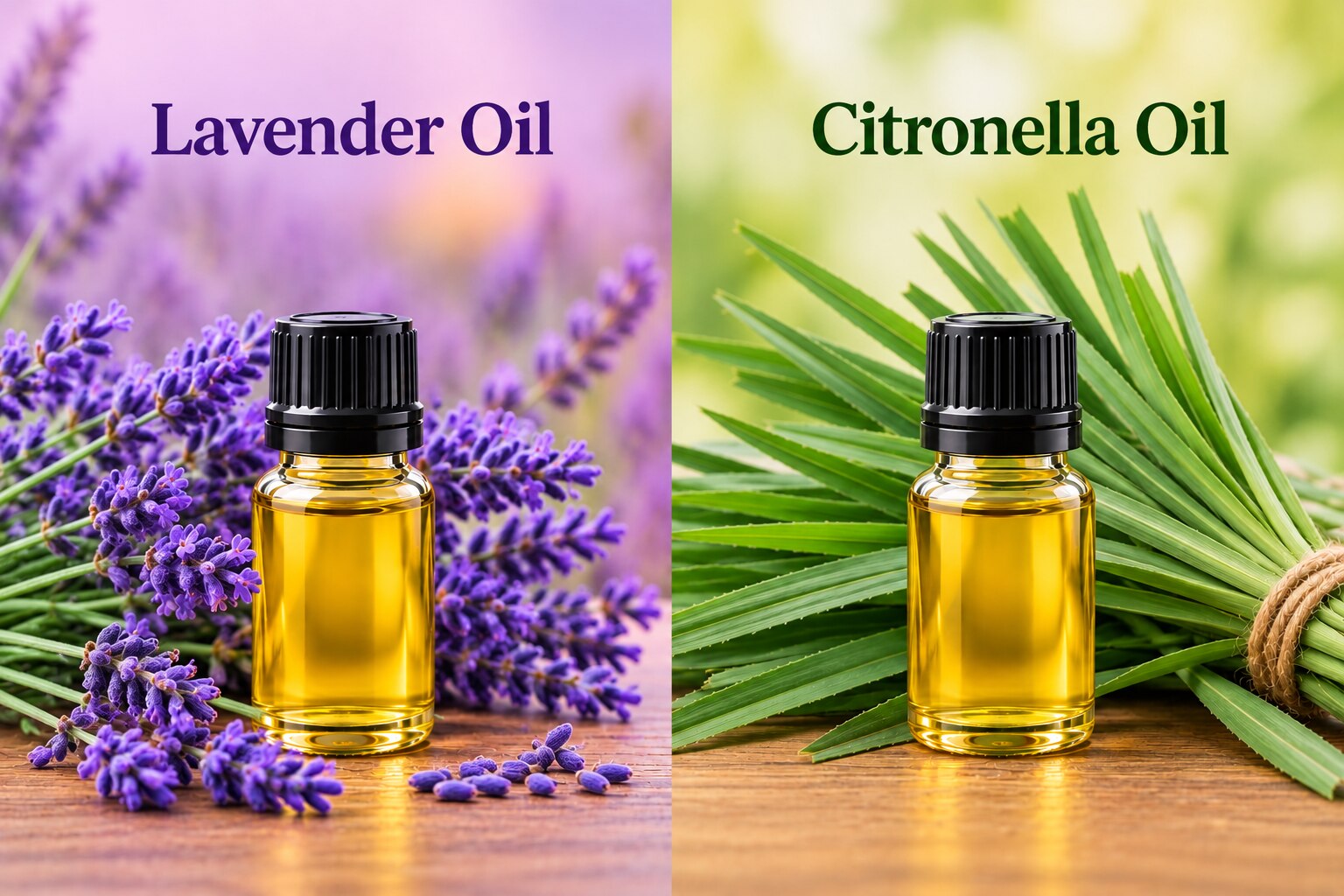
A fragrant oil is not automatically suitable for aromatherapy manufacture: species, plant part, distillation conditions and batch testing determine what enters the drum. By the end, you will be able to compare lavender and citronella oils, assess supplier documents, identify quality drift and store each oil without accelerating oxidation.
Key takeaways
- Confirm the botanical species, plant part, extraction method, and batch documents before approval.
- Compare citronella distillation cuts by aroma, colour, density, and analytical results.
- Choose lavender for floral profiles and citronella for fresh, lemony, functional accords.
- Store bulk oil cool, sealed, dark, and under a documented batch-control procedure.
How lavender oil moves from flowering plant to released batch
Lavandula angustifolia flowering aerial parts are the feedstock for a commercial oil distinct from lavandin, Lavandula × intermedia, and spike lavender, Lavandula latifolia.
| Species | Commercial distinction |
|---|---|
| Lavandula angustifolia | Floral oil with the expected linalool and linalyl acetate balance |
| Lavandula × intermedia | Lavandin oil with a different composition |
| Lavandula latifolia | Spike lavender oil, commonly marked by higher camphor |
Harvest timing shifts linalool, linalyl acetate and camphor, so record the harvest stage, field or region, plant part and batch identity. In steam distillation, prepared flowering material meets hot water vapour; in hydrodistillation, it is heated with water. The volatile compounds condense, then the essential oil separates from the hydrosol.
Filter the separated oil to remove suspended plant matter. Store it in a clean, tightly closed, light-protective container; air, heat and light can push a sound bulk lavender oil toward oxidation.
Release lavender oil manufacture against more than pale colour or a characteristic odour. Link the raw-material record and distillation run to:
- Relative density, refractive index, optical rotation and colour
- Organoleptic examination and batch-specific GC-FID or GC-MS results
- Measured linalool, linalyl acetate and camphor compared with the approved specification
Excess camphor, unusually low linalyl acetate or an atypical chromatogram can indicate the wrong species, poor fraction selection or adulteration. ISO 11024 provides a general reference for chromatographic-profile methods.
What distillation choices change in citronella oil
Java-type and Ceylon-type citronella produce different oils, so the choice affects what enters a soap, fragrance, diffuser or repellent formula. Leaves and aerial parts of Cymbopogon winterianus produce Java-type oil; Cymbopogon nardus produces Ceylon-type oil. They are not interchangeable.
Citronella oil manufacture begins with how the grass is handled:
- Harvest mature leaves and aerial parts, recording field, date and plant maturity. Wilt the cut grass for the defined period, then chop or prepare it consistently for steam contact.
- Record temporary storage conditions and the time between cutting and distillation. Heat, moisture, compression and long delays can shift the volatile balance before the still is loaded.
- Pass steam through the prepared grass. Vapour carrying the oil enters a condenser, where it returns to liquid; separate the lighter oil layer from the hydrosol, then filter suspended plant material before filling clean containers.
The batch record must capture the distillation cut, steam exposure and condenser conditions. Plant maturity, delayed distillation or a longer, more aggressive run can shift citronellal, citronellol and geraniol. Java-type material is generally associated with higher levels of these constituents; Ceylon oil has a different profile and is often lower in citronellal.
Specify the botanical name and type, not merely “citronella.” Use ISO 3848 for oil from Cymbopogon nardus and identify C. winterianus separately. Evaluate recovery and composition together: higher yield can produce a less representative volatile profile. A repellent claim still requires product-specific concentration, evaporation and regulatory testing; the oil alone does not prove finished-product efficacy.
When lavender or citronella is the right aromatherapy ingredient
A correctly identified Lavandula angustifolia oil is the better choice when the formula needs a soft, floral and herbaceous identity. It suits fine fragrance, massage blends, roll-ons, diffuser products, bath preparations and calming-positioned consumer products.
Consumers expect a recognizable lavender note, so excess camphor, harshness or an atypical odour can damage acceptance even when the label says natural.
| Ingredient | Sensory profile | Better fit | Wrong choice when |
|---|---|---|---|
| Lavandula angustifolia | Soft, floral, herbaceous | Fine fragrance, massage, bath, diffuser and calming products | The brief needs citronella’s fresh outdoor character |
| Citronella | Sharp, green, lemon-like and geranium-like | Functional fragrance, soaps, outdoor products and pronounced fresh blends | Its strong top note overwhelms delicate oils or the formula needs soft floral identity |
This distinction should guide lavender oil manufacture and citronella oil manufacture alike: species identity matters more than the word natural. Neither oil is inherently hypoallergenic. Review intended use and disclose relevant allergens, including linalool, limonene, geraniol, citronellol and citral; oxidation can increase sensitisation concerns.
Keep aromatherapy positioning separate from therapeutic or repellent claims. The claim depends on the finished formulation, concentration, dose, application site, evaporation behaviour and destination-market rules. Citronella oil alone does not prove repellent performance, while lavender oil alone does not justify a therapeutic claim.
How to approve bulk oil before it enters your formula
Approve bulk lavender oil or citronella oil for manufacture only when the drum, sample and documents identify the same batch.
For lavender, request:
- Latin name, species or chemotype, country and region, plant part, extraction method, harvest or production date, batch number, shelf-life or retest policy, and retained sample
- Certificate of analysis, batch-specific GC-FID or GC-MS chromatogram, safety data sheet, allergen declaration, technical data sheet and origin statement
- Density, refractive index, optical rotation, colour and odour results
Compare the delivered colour and odour with the approved sample. Reject a generic “typical GC profile”; it does not prove that the shipped drum matches your reference.
| Oil | Identity and profile | Approval focus |
|---|---|---|
| Lavender | Correct Lavandula species or chemotype | Physical constants and batch chromatogram |
| C. nardus citronella | Ceylon-type oil; ISO 3848 reference | Citronellal, citronellol and geraniol ranges |
| C. winterianus citronella | Java-type oil | Separate identity, CAS or FEMA designation and composition |
For citronella oil for manufacture, record the intended use and destination-market regulatory status. Ask for microbial or contaminant results when the finished product requires them.
Run a small formula trial before release. Check odour, colour, solubility, stability and packaging interaction. An aromatherapy oil supplier in Bengaluru should connect every document to the shipped batch; Shanti Aromatics can be considered at this decision point, but these checks must govern every supplier.
Related products
 | ESSENTIAL OIL ₹1800 COA OF LAVENDER OIL ----------------------------------------------------------------------------------------------- TEST SPECIFICATION RESULT... View product → |
 | essential oil ₹2500 Natural & pure View product → |
How to prevent adulteration, oxidation and batch drift after delivery
A delivered oil can fail before it enters the formula. Carrier-oil dilution, cheaper terpenes or aroma chemicals, and residual solvent can change odour, density, refractive index and the GC profile. Compare every incoming batch with the approved retained sample and batch-specific certificate; a generic “typical GC profile” proves nothing about the delivered drum.
Record the drum seal and batch number. Hold the lot for a new odour, unusual haze, unexpected viscosity or changed GC profile, then investigate before release. Oxidation from light, heat, air and repeated opening can alter colour and odour and increase sensitisation concerns involving linalool, limonene, geraniol, citronellol and citral. Natural does not mean hypoallergenic.
- Store bulk lavender oil and citronella oil in tightly closed, light-protective containers under the supplier’s stated cool, controlled conditions. Do not invent a temperature specification absent from the product documentation.
- Keep headspace and oxygen exposure low. Partially empty drums oxidise faster than full, well-sealed containers.
- Transfer only into clean, compatible containers. Use measured dispensing and smaller working containers to limit repeated opening.
| Failure | Warning signs | Control |
|---|---|---|
| Adulteration | Changed density or GC profile | Quarantine and test |
| Oxidation | Darkening or harsh odour | Reduce light, heat and air |
| Batch drift | Performance or scent change | Compare records and retain samples |
Whether the supply follows lavender oil manufacture or citronella oil manufacture, link receipt, inspection, test results, storage conditions and formula batch in one release record. This trace shows whether a change came from the oil or later handling.
Frequently asked questions
How does lavender oil move from flowering plant to released batch?
The process begins with authenticated Lavandula angustifolia flowering aerial parts, followed by controlled distillation, separation, filtration, testing, documentation, and batch release.
What distillation choices change citronella oil?
Feedstock condition, steam exposure, distillation duration, fraction collection, and storage conditions influence citronella oil’s aroma, colour, composition, and consistency.
When is lavender or citronella the right aromatherapy ingredient?
Choose lavender when you need a soft floral profile; choose citronella when you need a bright, lemony, herbaceous profile. Confirm the intended use, formulation limits, and safety requirements before selection.
How should you approve bulk oil before it enters your formula?
Match the container label to the purchase specification, inspect the seal and appearance, review the certificate of analysis and batch traceability, and compare identity and quality results with your acceptance limits.
How can you prevent adulteration, oxidation, and batch drift after delivery?
Keep containers tightly closed, protected from heat and light, and opened only under controlled handling. Retain representative samples, record usage by batch, and investigate changes in odour, colour, or analytical results.