A food flavour buyer must evaluate more than a lavender name, a fresh odour, or a low price: botanical identity, distillation choices, volatile composition, food-use documentation, and performance in the finished matrix all affect the result. By the end, you will have a practical method for screening the oil, running a controlled flavour trial, and comparing suppliers before approving a production lot.
Key takeaways
- Confirm Lavandula species, cultivar, harvest stage, and plant condition.
- Start flavour trials below the point where lavender becomes soapy.
- Request lot-specific COA, GC-MS profile, allergen, and food-use documents.
- Compare suppliers on consistency, testing, lead time, and delivered cost.
How lavender plant material becomes a food-use essential oil
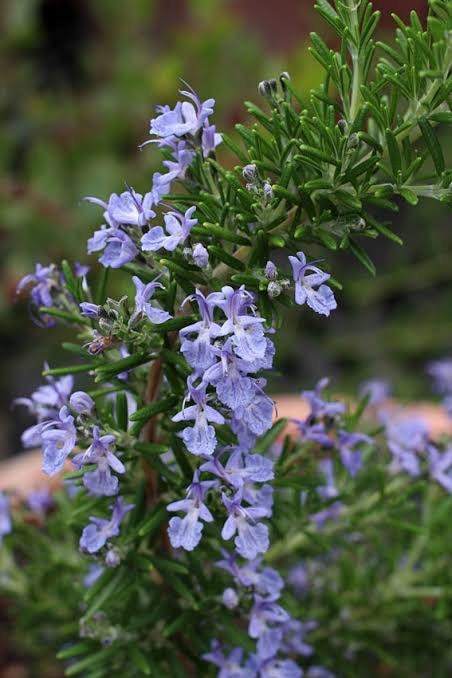
A food-use lavender essential oil begins with flowering aerial parts, not roots or a solvent extraction. Raw-material identity matters: Lavandula angustifolia is true lavender; Lavandula latifolia is spike lavender; lavandin hybrids combine L. angustifolia and L. latifolia. Cultivar, harvest maturity, and fresh versus wilted material alter both yield and flavour.
| Species | Indicative fresh-mass yield | Raw-material implication |
|---|---|---|
| Lavandula angustifolia | About 0.5–2.5% | Softer, more delicate floral oil |
| Lavandula latifolia | Variable; assess by batch | More herbal and camphoraceous |
| Productive lavandin hybrids | About 2–5% | Higher output, often stronger camphoraceous character |
Steam distillation or hydrodistillation carries volatile compounds into a condenser, producing essential oil and hydrosol. It does not produce a solvent extract, CO₂ extract, tincture, or infused edible oil. Loading density, steam rate, distillation duration, condenser performance, and hydrosol separation determine what reaches the receiver.
- Load flowering material evenly; dense packing restricts steam and leaves oil unrecovered.
- Separate the oil from hydrosol, then filter suspended plant particles and dry the oil to remove residual water.
- Store the sealed oil in a clean, light-protective container with limited headspace and controlled heat exposure.
Indicative yield does not prove quality. Aggressive recovery can pull high-boiling, resinous, or cooked notes into the oil. Ask any lavender oil manufacturer in Bengaluru where distillation and packing occur: Bengaluru may be the office, packing site, importer, blender, or actual distillery. Request traceability to the botanical raw material.
Which lavender profile fits the flavour you are building
Lavender oils are not interchangeable in food. Lavandula angustifolia usually gives the sweeter, softer floral character expected in delicate lavender flavour, while Lavandula latifolia and many lavandin hybrids bring stronger camphoraceous, herbal, and cineolic notes.
| Source or profile | Main sensory direction | Likely flavour fit |
|---|---|---|
| Lavandula angustifolia | Floral, sweet, rounded; linalool and linalyl acetate support this profile | Confectionery, beverages, dairy, and light syrups |
| Lavandula latifolia | Herbal, minty, medicinal; higher camphor, 1,8-cineole, borneol, and related constituents can dominate | Savoury products or assertive concepts, after matrix testing |
| Lavandin hybrid | More powerful and persistent, with a pronounced camphoraceous edge | Bakery or robust syrups only when the harsher notes are acceptable |
Heat can drive off bright top notes and leave a heavier aftertaste. Acid in beverages and syrups can sharpen the medicinal impression, while alcohol, fat, and emulsification alter release, persistence, and perceived balance.
Test lavender oil for flavour products in the finished food, not only on a blotter: an oil pleasant in fragrance evaluation can taste bitter, minty, or soapy.
Treat culinary-grade status as documentation, not a smell. Confirm intended-use authorization, contaminant controls, compliant labelling, and the applicable food-flavour rules, including Regulation (EC) No 1334/2008 in the EU or the relevant FDA and FEMA position in the United States. “Natural” alone proves none of these.
How to run a lavender flavour trial without creating a soapy note
Start at 0.005–0.02% of the finished food, equivalent to 50–200 ppm, then adjust only after tasting lavender oil for flavour products in the actual matrix. The legal maximum and permitted use level depend on the destination market and product category.
Make a measured pre-dilution in a suitable food-compatible carrier before addition. Do not dose neat oil into a batch: a small volume can create localised over-concentration and an uneven result.
For beverages, choose a delivery system that keeps the flavour uniform. Bulk lavender essential oil is not automatically water-dispersible.
| Delivery system | Main risk with neat oil | Controlled approach |
|---|---|---|
| Emulsion | Separation, turbidity, uneven dosing | Validate droplet stability in the beverage |
| Encapsulated preparation | Loss of top notes or delayed release | Check release during processing and storage |
Use this sensory sequence:
- Smell the neat sample and record floral, herbal, camphoraceous, and solvent-like notes.
- Assess the pre-dilution for clarity, odour balance, and any carrier interference.
- Taste several concentrations in the finished food, including 50, 100, and 200 ppm.
- Compare each result with a retained reference under identical conditions.
- Evaluate the selected level after heat processing and again after storage.
Overdosing is the main cause of medicinal, camphoraceous, bitter, or soapy impressions. Reduce the level before changing the oil when that character appears.
What evidence should support approval of a new lavender oil lot
Approve a new lavender oil lot only when the lavender oil supplier supports identity, composition, safety, and legal food use with lot-specific evidence.
1. Request a lot-specific certificate of analysis (COA) stating the botanical name, plant part, country of origin, harvest date or season, extraction method, batch number, manufacturing date, shelf life, appearance, odour, packaging conditions, allergen declaration, pesticide statement, and solvent-residue statement. Request microbiological results when the application, customer specification, or risk assessment requires them.
2. Check refractive index, specific gravity or relative density, and optical rotation against the declared lavender material and the supplier’s approved range. Require a batch-specific GC-FID or GC-MS chromatogram, not a generic specification sheet, with ranges for linalool, linalyl acetate, camphor, 1,8-cineole, borneol, and other declared markers.
3. Treat GC-MS as evidence, not complete authentication. Synthetic linalool, synthetic linalyl acetate, cheaper lavandin, camphor-rich oil, or another terpene source can produce a plausible profile; use chiral GC, isotope-ratio testing, or validated reference-profile comparison for high-risk or high-value applications.
4. Verify the intended food-flavour position under EU Regulation (EC) No 1334/2008, or the applicable FDA and FEMA position in the United States. “Natural” and fragrance acceptance do not establish food authorization. Reject any lot whose documentation cannot connect the sealed batch to its raw material and declared use.
How to compare suppliers beyond the quoted price
Price is only one line in the decision: compare reproducibility, handling controls, and the supplier’s ability to investigate a failed flavour trial. A lavender oil supplier with a low quote but inconsistent lots can cost more through reformulation, rejected batches, and delayed production.
| Criterion | Compare before approval | Why it matters |
|---|---|---|
| Batch consistency | Batch-specific GC-FID or GC-MS, sensory results, a sealed reference sample, and an aged or retained sample | A fresh COA can conceal oxidation or blending differences |
| Commercial fit | Minimum order quantity, sample approval process, lead time, and container size | A technically suitable oil may still be impractical to qualify or replenish |
| Packaging and storage | Light-resistant sealed containers, minimal headspace, storage temperature, and transport conditions | Oxygen, heat, light, and repeated headspace exchange can make bulk lavender essential oil harsher |
| Traceability and control | Finished-lot records linked to botanical raw material, plus deviation and change records | You need to identify the cause of a failed lot |
Ask how the supplier controls oxidation, handles specification deviations, and communicates changes to cultivar, origin, distillation settings, blending, packaging, or test methods. Require retained samples from each production lot and compare them with the approved reference after storage.
If a company calls itself a lavender oil manufacturer in Bengaluru, confirm whether Bengaluru is the distillation site, registered office, or packing location. SHANTI AROMATICS belongs in the comparison only after it provides the same lot traceability, sample approval, change-control records, and documentation required from every candidate.
Related products
 | ESSENTIAL OIL ₹1800 COA OF LAVENDER OIL ----------------------------------------------------------------------------------------------- TEST SPECIFICATION RESULT... View product → |
 | ESSENTIAL OIL ₹2500 Essential oil View product → |
Frequently asked questions
How does lavender plant material become a food-use essential oil?
Manufacturers identify the flowering aerial parts, control harvest and handling, and use steam distillation before testing and releasing the oil for food use.
Which lavender profile fits a food flavour?
True lavender, spike lavender, and lavandin differ in composition and aroma. Match the species and sensory profile to the flavour brief rather than choosing on name alone.
How can you trial lavender oil without creating a soapy note?
Build a dilution series, add lavender at low levels, and evaluate it with the complete food matrix. Increase dosage only while the floral character remains balanced.
What evidence should support approval of a new lavender oil lot?
Request a lot-specific certificate of analysis, GC-MS profile, botanical identity, physical data, allergen statement, food-use documentation, and traceability details.
How should you compare lavender oil suppliers beyond price?
Compare delivered cost, batch consistency, testing scope, minimum order, lead time, packaging, technical support, and the supplier’s ability to trace each lot.
Related product
 | essential oil ₹2500 Natural & pure View product → |