A bulk tea tree oil purchase is only comparable when every supplier quotes against the same botanical identity, chromatographic profile, packaging, delivery basis and intended use. By the end, you will have a practical specification, sample-approval process and Mumbai supplier checklist for deciding whether a batch is suitable for production.
Key takeaways
- Define grade, botanical identity, chemotype and test limits before requesting prices.
- Compare quotations by delivered cost, concentration, packaging, documents and minimum order quantity.
- Test a sealed production sample for identity, composition, appearance and contamination.
- Confirm batch records, transport conditions, storage life and licences before ordering.
What should a bulk tea tree oil specification contain?
A bulk tea tree oil specification must define both the intended grade and the identity of the material. Cosmetic grade suits products governed by cosmetic rules; pharmaceutical grade requires the applicable pharmacopoeial or drug standard; food grade requires food-additive or flavour-use compliance; technical grade covers industrial applications where those standards do not apply.
“All grade” is not a recognised substitute for a finished-product and destination-market specification.
For genuine Melaleuca alternifolia oil, require steam-distilled leaf or leaf-and-terminal-branch material and comparison with ISO 4730:2017. State target or ISO limits for terpinen-4-ol (35–48%), gamma-terpinene (14–28%), alpha-terpinene (6–12%), 1,8-cineole (2–8%), p-cymene (0.5–8%), limonene (0.5–4%) and alpha-terpinolene (1.5–5%). Require specific gravity, refractive index, optical rotation, appearance, characteristic odour and the complete GC-FID or GC-MS chromatogram.
A high terpinen-4-ol result alone proves nothing: dilution, isolated-terpene addition, another Melaleuca species or reconstruction can produce a similar headline assay. Tea tree oil is not tea seed oil and is not an aroma-chemical blend.
Ask the tea tree essential oil supplier for these batch-linked records:
- Certificate of analysis, safety data sheet, technical data sheet and certificate of conformity
- Batch number, country or region of origin, extraction details and net quantity
- Allergen and contaminant declarations, plus the full chromatogram
The applicable specification depends on the finished product and destination market. Cosmetic grade is not automatically pharmaceutical or food grade; bulk tea tree oil still needs use-specific approval.
How do you compare tea tree oil prices and supplier quotations?
Compare landed cost only after putting a Mumbai manufacturer, trader, importer and overseas supplier on the same specification and delivery basis. A tea tree oil price per kilogram means little without the quotation date and specification sheet.
Ask every tea tree essential oil supplier to state:
- Grade or chemotype, assay profile, botanical origin, harvest or crop details when available, certification and test package
- MOQ, drum or IBC size, production lead time, Incoterm, freight, taxes, and whether the price is ex-works Mumbai or delivered
- Monthly production capacity, stock age, retained-sample policy, lot traceability and repeat-batch matching
- Confirmation that the bulk tea tree oil is undiluted, contains no isolated-terpene additions and is Melaleuca alternifolia, not another Melaleuca species
Supplier comparison table:
| Basis | What to compare |
|---|---|
| MOQ and pack size | Minimum kilograms; drum or IBC capacity |
| Lead time and dispatch | Production days, ex-works or delivered terms |
| Sample policy | Representative lot sample, charge and approval process |
| Hazardous-goods documents | SDS, transport classification and export papers |
| Repeat-batch matching | Approved reference sample and tolerance process |
“100% natural” proves neither identity nor purity. Reject an undated, incomplete COA, especially one without a chromatogram, physical constants or lot number.
Use GC-FID or GC-MS for routine screening. Suspicious or high-value lots justify chiral GC, isotope-ratio analysis or comparison with an authenticated reference sample, particularly when the price, odour or terpinen-4-ol profile is inconsistent.
How does tea tree oil fit different formulations, and when is grapefruit oil the right comparison?
Tea tree oil suits shampoo, soap, creams, household cleaners, diffusers and industrial fragrance bases when a strong medicinal-camphoraceous odour is acceptable. It is oil-soluble, oxidation-sensitive and capable of shifting colour or odour, so test it in the finished product for compatibility, stability and packaging interaction.
Cosmetic and topical uses require the applicable IFRA restriction and destination-market cosmetic rules; no single safe percentage applies to every product category. Tea tree oil is the wrong choice when you need a different odour profile, a lower sensitisation burden, a water-soluble material or a defined pharmaceutical monograph.
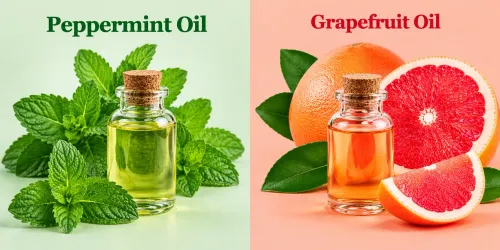
The search phrase “grapefruit oil for manufacture in mumbai” describes a separate sourcing requirement, not a tea tree specification. Likewise, “tea tree oil manufacture supplier grapefruit oil for manufacture in mumbai” joins two searches that require separate botanical and quality specifications.
| Material | Botanical source | Formulation role and odour | Quality markers |
|---|---|---|---|
| Tea tree oil | Melaleuca alternifolia | Medicinal, camphoraceous; functional note in toiletries, cleaners and fragrance bases | Steam-distilled leaf or leaf-and-terminal-branch oil; compare GC profile and physical constants with ISO 4730:2017 |
| Grapefruit oil | Citrus paradisi | Fresh citrus top note for fragrances, cleaners and personal care | Specify expressed or cold-pressed, steam-distilled or FCF; these are not interchangeable |
| Expressed grapefruit oil | Citrus paradisi | Bright citrus, with possible phototoxic concern | Request a furocoumarin or bergapten statement for relevant leave-on or sun-exposed products; “natural” alone proves nothing |
A defined water-soluble grapefruit material or FCF grade may fit better than tea tree oil, but confirm the resulting odour and safety profile in the finished formula.
How should you receive, store and test a production sample?
Do not approve a bulk tea tree oil order from a development sample alone. Request a representative pre-shipment sample linked to the proposed production lot, then compare it with the agreed reference before authorising dispatch.
1. Check colour, clarity and characteristic odour. Record the production date, retest or expiry policy, storage conditions, container material and lot number.
2. Send the sample for identity testing. Review the full GC-FID or GC-MS chromatographic pattern, not only terpinen-4-ol. Check oxidation indicators and investigate unusual p-cymene, altered odour, or other evidence of ageing, dilution or substitution.
3. Test the oil in the actual shampoo, soap, cream, cleaner, diffuser or fragrance-base system. Record odour shift, solubility, colour change, stability and packaging compatibility.
| Check | Acceptance question | Failure response |
|---|---|---|
| Appearance | Does it match the approved colour and clarity? | Hold the lot and investigate |
| Chromatogram | Does the complete pattern match the specification? | Request expanded testing |
| Odour | Is the characteristic profile unchanged? | Check oxidation and age |
| Formulation | Does the finished system remain stable? | Reject or reformulate |
Store approved material in compatible lined steel or suitable high-density polyethylene containers with full closure and minimal headspace. Protect it from direct light, use cool controlled storage within the supplier’s stated temperature range, and retain a sealed sample from every lot.
During transfer, use labelled equipment, ventilation, gloves and eye protection; avoid ignition sources and repeated drum opening or air exposure. Record the opening date.
What should you confirm before placing a Mumbai bulk order?
A local Mumbai address does not prove local distillation or uninterrupted stock. Ask whether the oil is manufactured, imported or repacked, and link every quotation to a specific batch.
- Confirm Melaleuca alternifolia, the plant part, steam-distillation method, ISO 4730:2017 comparison, specific gravity, refractive index, optical rotation, appearance, odour and complete GC-FID or GC-MS profile.
- Request allergen and contaminant information, SDS, TDS, batch-specific COA, certificate of conformity, batch number, country or region of origin and origin documents.
- Ask the tea tree essential oil supplier for MOQ, available pack sizes, drum or IBC options, current stock date, production lead time, dispatch terms from Mumbai, freight responsibility, taxes and sample charges.
- Agree how to approve a representative reference sample. Require the supplier to explain how repeat batches are matched against it and what happens if a commercial lot fails on arrival.
| Check | Evidence to compare | Failure risk |
|---|---|---|
| Technical identity | ISO 4730:2017, physical constants and full GC profile | Substitution, ageing or reconstruction |
| Commercial basis | Grade, MOQ, pack, Incoterm, freight and taxes | Misleading per-kilogram price |
| Traceability | Batch, origin, stock date and manufacturing status | Repacked or unavailable material |
A buyer assessing a tea tree oil manufacturer in Mumbai can ask SHANTI AROMATICS for the same evidence and terms used to compare a manufacturer, trader, importer or overseas source. Approve only when identity, intended-use compliance, sample performance, traceability, logistics and landed cost agree.
Related product
 | ESSENTIAL OIL ₹1800 All grade View product → |
Frequently asked questions
What should a bulk tea tree oil specification contain?
State the intended grade, Melaleuca alternifolia botanical identity, plant part, extraction method, origin, chemotype, appearance, odour, density, refractive index, optical rotation, chromatographic profile, contaminant limits, packaging and shelf life.
How do you compare tea tree oil prices and supplier quotations?
Compare the same grade and specification on a delivered-per-kilogram basis, then check concentration, batch size, minimum order, packaging, freight, taxes, testing documents, payment terms and replacement policy.
How does tea tree oil fit different formulations, and when is grapefruit oil the right comparison?
Tea tree oil suits products where its distinctive terpene-rich aroma and functional profile fit the formula. Compare grapefruit oil when you need a brighter citrus odour, a different sensory profile or a citrus-based formulation rather than a direct substitute.
How should you receive, store and test a production sample?
Check the seal, drum markings, batch number, net weight and accompanying certificate on receipt. Store the oil in a cool, dry, dark area with minimal headspace, then test identity, appearance, odour, density and GC profile against the agreed specification.
What should you confirm before placing a Mumbai bulk order?
Confirm the exact material name, grade, specification, batch availability, quantity, packaging, delivery address, lead time, documents, payment terms, transport conditions, storage instructions and the supplier's replacement process for nonconforming material.