A food-flavour buyer cannot approve “citronella oil” from the trade name alone: species, distillation conditions, chemical profile and intended-use documents determine whether the material is suitable. By the end, you will be able to compare Java and Ceylon oils, read a batch COA, identify missing food-safety evidence and qualify a genuine distiller or supplier.
Key takeaways
- Choose Java citronella only when its flavour profile fits your formulation.
- Request species, plant part, batch, origin, and distillation records.
- Check the COA for identity, density, refractive index, and chromatographic results.
- Audit Mumbai suppliers for traceability, food-safety controls, and retained samples.
How is citronella oil manufactured from harvested grass?
Citronella oil manufacture starts with authenticated grass: Cymbopogon winterianus for Java type or Cymbopogon nardus for Ceylon type. The species, plant part, harvest date and field origin are recorded before the load enters the distillery.
- Harvest the grass and remove soil, stones and visibly damaged material.
- Wilt or partially dry it to reduce free moisture without driving off excessive volatile oil.
- Chop the grass to expose more surface area, but avoid excessively fine material that compacts and blocks steam flow.
- Load the still evenly; loose loading causes poor contact, while dense loading creates channeling and leaves unextracted pockets.
- Pass steam through the charge. Steam rate controls vapour release, recovery, entrainment and the time needed to complete the run.
- Condense the vapour into an oil-water mixture, then separate the lighter oil layer from the aqueous distillate.
- Filter the separated oil to remove grass particles and suspended water.
- Dry the oil with a suitable drying agent or controlled settling, then pack it in clean, tightly sealed, light-protective containers.
Drying time changes both moisture content and aroma: insufficient drying weakens steam penetration, while prolonged drying can reduce volatile constituents. Distillation cuts also matter; early, middle and late fractions can differ in citronellal, citronellol, geraniol and terpene content. Blend or approve fractions only against the required specification.
Store finished oil cool, away from light, heat and oxygen, with batch identity preserved. Record steam conditions, load weight, yield and cut timing so a buyer can compare one lot with the next.
Which citronella type is suitable for a food flavour application?
The safer starting point is Java type, not a generic “citronella” label. Java oil comes from Cymbopogon winterianus and is usually richer in citronellal, citronellol and geraniol; Ceylon oil, from Cymbopogon nardus, has a materially different balance of these compounds and related terpenes.
| Type | Typical profile | Buying implication |
|---|---|---|
| Java citronella | Strong citronellal, with notable citronellol and geraniol | Specify this type when the flavour concept and regulatory reference support it |
| Ceylon citronella | Different, usually less citronellal-dominant profile with its own terpene balance | Do not substitute it for Java oil without reformulation and reapproval |
Neither type becomes a food flavour merely because it is steam-distilled or described as natural. Confirm that the intended ingestion use is covered in the destination market, using a FEMA reference or another recognised food-flavour basis.
In the United States, 21 CFR 182.20 applies only when the substance and intended use fall within that provision and good manufacturing practice.
Ask for a food-use declaration, botanical identity, purity specification, carrier and processing-aid statement, allergen declaration, pesticide and contaminant results, and compliant labelling information. A repellent-grade specification proves neither edible quality nor regulatory acceptability.
- Reject names such as “citronella compound” unless every addition is disclosed.
- Do not substitute lemongrass oil, whose character is driven by citral, or lemon oil, which is dominated by citrus terpenes.
- State Cymbopogon species, type, origin, extraction method and constituent limits in the purchase specification.
How does citronella compare with lemongrass, lemon and rosemary oils?
Citronella is not a substitute for a citrus note. Compare the oils by composition and sensory impact before choosing one for a food flavour system.
| Oil | Aroma profile and dominant constituents | Flavour intensity and batch variability | Wrong-use scenario |
|---|---|---|---|
| Citronella | Rosy, lemony and slightly waxy; Java types are rich in citronellal, citronellol and geraniol, while Ceylon types contain more related terpenes and less predictable balance. | High impact at low dosage; aroma shifts with species, harvest, drying and distillation cuts. | Using an insect-repellent grade as an edible flavour, or replacing lemongrass without checking food-use status. |
| Lemongrass | Clean, sharp lemon character led by citral, the combined geranial and neral fraction. | Usually more direct and recognisable in beverages, sauces and confectionery; citral level varies with species, age and processing. | Choosing citronella when the formula needs a clean lemon note rather than a floral, perfumery character. |
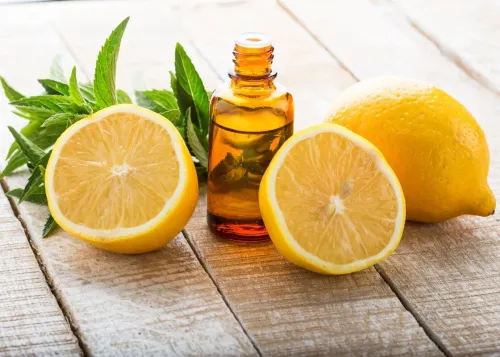
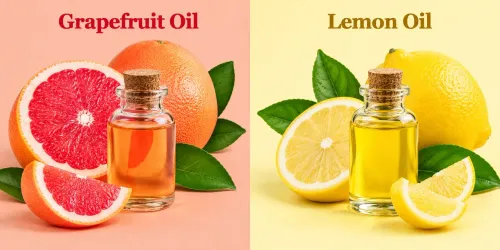
| Lemon | Bright peel and fresh citrus, dominated by limonene with beta-pinene and gamma-terpinene. | Strong top note but oxidation quickly changes freshness; origin, peel condition and storage affect the profile. | Using it where a herbaceous or citronellal-led note is required. |
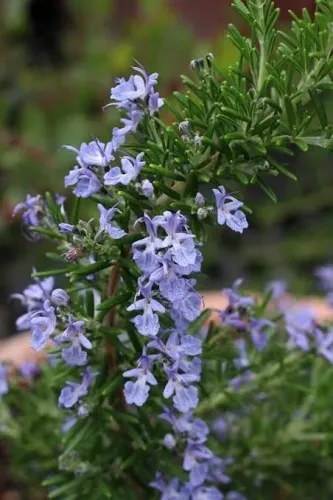
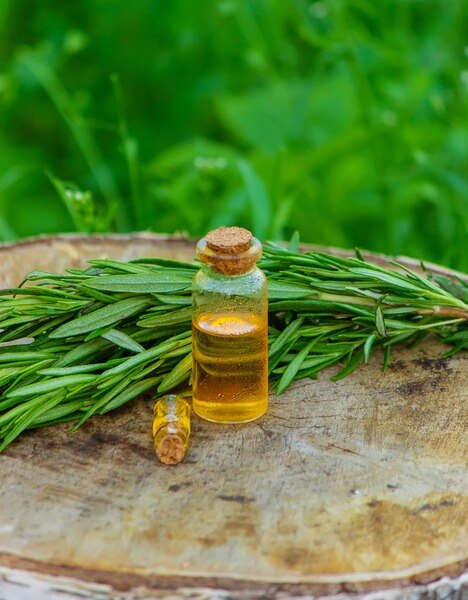
| Rosemary | Camphoraceous, piney and herbal; lots may be led by 1,8-cineole, camphor, borneol, alpha-pinene or verbenone. | Potent and highly chemotype-dependent; colour and odour alone cannot control lot consistency. | Treating rosemary oil as a neutral antioxidant or specifying it without a target GC profile. |
Rosemary essential oil is the volatile steam distillate. Rosemary antioxidant extract is a different, non-volatile ingredient standardised for carnosic acid and carnosol; never substitute or contract them interchangeably. Rosemary oil manufacture therefore requires the intended chemotype and batch GC-FID or GC-MS profile in the specification.
What should a buyer demand in the specification and certificate of analysis?
Approve a lot only when its paperwork identifies the material and proves that the delivered batch matches it. “Steam-distilled” does not establish food-use status. Ask for the destination market’s flavour-regulatory basis, intended-use documentation and carrier or processing-aid statement. A COA that only says “citronella oil—passes GC-MS” provides generic identity, not batch proof.
- Botanical name and type: Cymbopogon winterianus, Java, or Cymbopogon nardus, Ceylon; plant part; country and region of origin; steam-distillation method.
- Batch number, production date, shelf life, packing format and storage conditions, linked to raw-material and finished-batch traceability records.
- Allergen declaration, pesticide-residue results, contaminant results and a residual-solvent statement.
- Density and refractive index, each with test temperature; optical rotation where relevant; colour and odour assessment.
- Batch-specific GC-FID or GC-MS chromatogram with relative constituent percentages, including agreed limits for citronellal, citronellol, geraniol and other markers.
- Microbial results, heavy-metal limits, adulteration screening, prohibited-addition declaration and destination-market labelling or regulatory documents.
- Contract terms for constituent limits, packaging, shelf life and change control, so a supplier cannot substitute a different type or compounded aroma preparation.
Compare each new lot with the approved specification and previous lot, not just a pass/fail label.
| Measure | Lot comparison | Approval check |
|---|---|---|
| Density, refractive index, optical rotation | Record both values and test conditions | Investigate unexplained drift |
| GC-FID or GC-MS | Compare marker percentages and chromatograms | Reject unexplained profile changes |
| Microbes, metals, pesticides | Compare results with contract limits | Confirm destination-market compliance |
How do you qualify a citronella oil manufacturer in Mumbai?
A credible citronella oil manufacturer in Mumbai must show where it distills the oil, not merely where it stores or dispatches it. Use this qualification procedure:
1. Request the distillation address, botanical raw-material records for Cymbopogon winterianus or Cymbopogon nardus, harvest or purchase dates, batch records and yield data. An importer, trader, repacker or blender will not be able to provide complete distillation records.
2. Ask for the manufacturing licence, food-safety certification or registration, and export or destination-market documents applicable to your flavour use. An insect-repellent specification does not prove food suitability; verify the intended use, FEMA or other recognised food-use reference, purity, contaminants and labelling rules.
3. Compare a retained sample from the proposed batch with a sealed production sample. Match odour, appearance, density, refractive index, optical rotation and batch-specific GC-FID or GC-MS results. Define the action for a failed comparison.
4. Put Java or Ceylon type, species, plant part, origin, steam-distillation method, constituent limits and residual-solvent status in the contract. Prohibit added isolated aroma chemicals, cheaper oils, carrier oils, exhausted material and undisclosed blending.
5. Specify shelf life, fill volume, aluminium or suitable lined packaging, nitrogen flushing where used, headspace control, light and heat limits, and oxidation testing. Require written change control before any alteration to grass source, process, packaging or specification.
6. Add isotope-ratio, chiral or targeted marker testing when dilution, synthetic addition or botanical substitution could cause significant commercial or regulatory loss. SHANTI AROMATICS should enter approval only after supplying this evidence for your destination market.
Frequently asked questions
How is citronella oil manufactured from harvested grass?
A manufacturer authenticates Cymbopogon winterianus or Cymbopogon nardus, records harvest and field details, then steam-distils the cut grass. The oil is separated, filtered, stored in full sealed containers, and released after identity and quality testing.
Which citronella type is suitable for a food flavour application?
Java citronella oil from Cymbopogon winterianus is the starting point when a stronger citronellal-rich profile suits the flavour. Confirm the intended use, regulatory status, sensory profile, and analytical specification before approval; do not substitute Ceylon oil without a reformulation review.
How does citronella compare with lemongrass, lemon and rosemary oils?
Citronella gives a sharper, citronellal- and geraniol-led profile. Lemongrass is more citral-led, lemon oil supplies a fresh citrus top note, and rosemary oil has a herbaceous, camphoraceous profile. Compare aroma, flavour impact, dosage, stability, and label requirements rather than treating them as interchangeable.
What should a buyer demand in the specification and certificate of analysis?
Request the botanical name, plant part, country and field origin, extraction method, batch number, manufacture date, shelf life, appearance, odour, relative density, refractive index, optical rotation where specified, and a GC-MS or GC-FID profile. Also request microbiological, contaminant, adulteration, and residual-solvent results when your food-safety assessment requires them.
How do you qualify a citronella oil manufacturer in Mumbai?
Verify the legal entity, manufacturing address, food-business licence where applicable, traceability procedure, raw-material records, distillation controls, laboratory capability, COA format, retained-sample policy, packaging controls, and complaint or recall procedure. Request a representative sample and match it against the final production batch.