Italian origin does not define a single lavender oil, technical grade, or performance level. By identifying the species, intended use, analytical limits, traceability and landed cost, you can decide whether an Italian lot is a better fit than French, Bulgarian, Indian or lavandin alternatives.
Key takeaways
- Match Lavandula angustifolia or other species to your odour and regulatory route.
- Define Italian origin by cultivation, distillation and export documents.
- Request lot-specific GC-MS, specifications, allergen data and safety documents.
- Run a reproducibility and landed-cost trial before approving supply.
Match the lavender species to the product you are making
Choose the species by the product’s odour target, performance and regulatory route—not by the word “lavender” alone. Lavandula angustifolia is the usual choice for fine fragrance, premium cosmetics and aromatherapy because its softer floral profile is associated with linalool and linalyl acetate.
Lavandin is a hybrid of L. angustifolia and L. latifolia, not simply a cheaper true lavender; its stronger camphoraceous character suits cost-sensitive functional products.
| Option | Typical composition and odour | Suitable applications |
|---|---|---|
| Lavandula angustifolia | Softer floral odour; higher linalyl acetate and linalool; lower camphor | Fine fragrance, premium cosmetics, aromatherapy and delicate personal-care products |
| Lavandula latifolia | Sharper, fresher odour; more 1,8-cineole and camphor | Functional fragrance, household products and blends needing lift |
| Lavandin | Hybrid profile; generally more 1,8-cineole and camphor; higher output | Soap, detergent, air care and other cost-sensitive fragrance systems |
An industrial lavender oil buyer should match the oil to the finished product’s sensory brief and dose, then confirm the species on the specification and certificate of analysis. Do not substitute lavandin for L. angustifolia in a fine fragrance formula without a reformulation trial; the added camphor and cineole can make the result harsher.
For food or oral use, fragrance suitability is not enough. Require the food-flavouring, contaminant, pesticide and labelling assessments for that market. For workplace handling, obtain the current SDS for the exact lot because composition can affect sensitising and environmental-hazard classification.
Define what “Italian” means before comparing origins
“Italian” is not a single technical claim: it can describe where the lavender was grown, where the oil was distilled, where a blend was assembled, or where the supplier is based. Treat each origin as separate purchasing information. Italian lavender oil for industrial buyers is meaningful only when the seller states which claim applies.
1. Italian-grown: request the farm or field location, harvest year, botanical material declaration, and an origin statement. This supports Italian agricultural origin.
2. Distilled in Italy: confirm the distillation address and whether the plant material came from Italy or another country. Imported lavender distilled in Italy is not the same as Italian-grown oil.
3. Blended or packed in Italy: ask for every contributing origin, the percentage from each source, and the blending batch record. A blend can carry an Italian handling history without being Italian agricultural oil.
4. Italian supplier: verify the actual crop, distillation site, and batch owner. A company’s address alone proves none of those details.
In lavender oil manufacture, steam or hydro-distillation of flowering aerial parts produces an oil shaped by harvest maturity, wilting or drying, charge size, steam conditions, distillation time, and storage. Ask the supplier to identify Lavandula angustifolia, Lavandula latifolia, or Lavandula × intermedia, then match that identity to the lot documents.
If the origin wording, botanical identity, or process history is vague, compare the oil as an unspecified blend rather than paying a premium for “Italian” origin.
Request a lot-specific specification, not a marketing description
Approve only against a numbered lot, not a brochure. Request a lot-specific certificate of analysis (COA) showing the batch number, production date, botanical name, plant part, country of cultivation, distillation site, yield, and retest or shelf-life date.
The supplier’s lavender oil manufacture description should state steam or hydro-distillation, flowering-part condition, charge size, distillation time, and storage conditions.
Require these release documents and tests:
- COA with relative density, refractive index, optical rotation, acid value, and ester-related result at stated test temperatures and methods.
- Gas chromatography (GC-FID or GC-MS) showing percentages for linalool, linalyl acetate, terpinen-4-ol, lavandulol or lavandulyl acetate, 1,8-cineole, and camphor.
- Identity against ISO 3515 when the oil is Lavandula angustifolia; use a written, species-specific GC and physicochemical specification for latifolia or lavandin.
- Safety Data Sheet, allergen declaration, and adulteration or purity statement.
- Pesticide-residue, heavy-metal, and microbiological results for food or oral applications, with limits tied to your destination market.
| Evidence | What to compare | Why it matters |
|---|---|---|
| Generic specification | Fixed target ranges | Describes a product, not your shipment |
| Lot COA | Actual numerical results and batch number | Confirms what you will receive |
| Supplier GC report | Peaks, percentages, method, and chromatogram | Exposes dilution, blending, or species mismatch |
Reject a COA that reports only “conforms” without figures, test methods, or sample identification. Cosmetic or fragrance approval does not qualify the oil for ingestion.
Check export-grade evidence against the end-use rules
“Export grade” is commercial language, not a universal legal category. Ask an Italian lavender oil supplier to prove that the specific lot meets your destination country’s import, safety and end-use rules.
Request these records before approval:
- Lot-specific certificate of analysis with botanical identity, batch number, production date, relative density, refractive index, optical rotation, acid value or ester measurement, and GC results for linalool, linalyl acetate, terpinen-4-ol, lavandulol, lavandulyl acetate, 1,8-cineole and camphor.
- Current safety data sheet for that exact oil, including sensitiser, environmental hazard and transport classification where applicable.
- Product identity and origin statement showing whether Italy refers to cultivation, distillation, blending or the supplier’s location.
- Allergen declaration and any customer-required pesticide, contaminant or sustainability statement.
- Export documents required by the destination, such as commercial invoice, packing list, certificate of origin and transport records.
Do not accept a generic specification as proof that the lot is lavender essential oil export grade. Compare the reported GC profile and physical values with your approved range, then retain a sealed reference sample for incoming testing.
Apply the end-use rule separately. Food or flavour-related use needs food-flavouring, contaminant, pesticide and labelling review; cosmetic, detergent or perfumery acceptance does not authorise ingestion. SHANTI AROMATICS can be evaluated by the same lot-document checklist, rather than by its catalogue wording alone.
Reject the shipment if the batch identity, SDS, analytical results or destination-market declarations do not align.
Related products
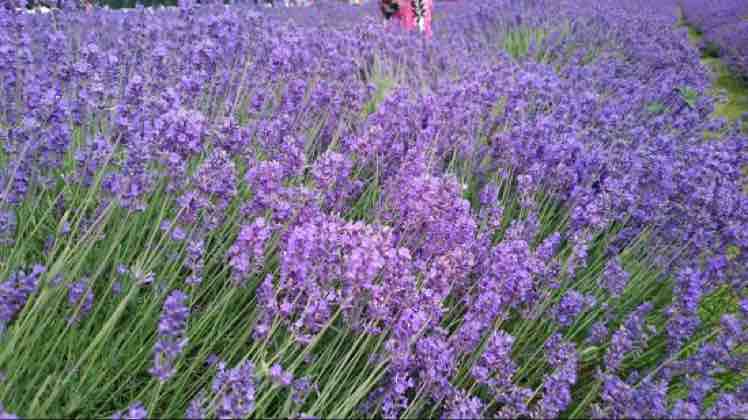 | ESSENTIAL OIL ₹2500 Essential oil View product → |
 | ESSENTIAL OIL ₹1800 COA OF LAVENDER OIL ----------------------------------------------------------------------------------------------- TEST SPECIFICATION RESULT... View product → |
Make the decision with a reproducibility and landed-cost trial
An industrial lavender oil buyer should approve Italian origin only after a matched trial against French, Bulgarian, or another qualified source. Use the same botanical species, specification, package size, annual volume and delivery term; otherwise, a cheaper oil can appear better because it is not solving the same formulation problem.
- Request three production lots from each finalist, not three samples from one lot.
- Run the oils through your actual process and record dosage, odour, colour, yield, residue and rework.
- Compare quantitative GC-FID results and selected chiral markers; use extra authenticity testing when the price or provenance claim justifies it.
- Calculate landed cost per accepted kilogram: oil price, freight, insurance, duty, testing, storage, loss and rejected batches.
- Repeat the trial with a second shipment before committing annual volume.
| Origin | Commercial advantage to test | Main risk to quantify |
|---|---|---|
| Italian | Regional story, local aroma profile, shorter European route | Limited volume, seasonal variation, higher delivered cost |
| French | Established fine-fragrance positioning and comparable European logistics | Premium pricing or supply constraints |
| Bulgarian | Broad lavender availability and competitive cost | Lot-to-lot odour and composition variation |
| Lavandin | Lower cost for soap, detergent and household fragrance | Different species profile; more camphor and 1,8-cineole than Lavandula angustifolia |
Choose Italian oil when it meets your release limits, survives production without adjustment and produces the lowest cost per accepted finished batch. For food or oral products, add flavour-use, contaminant, pesticide and labelling approval; cosmetic or perfumery acceptance does not qualify the oil for ingestion.
Frequently asked questions
Which lavender species fits fine fragrance and premium cosmetics?
Lavandula angustifolia is usually selected for its softer floral profile and association with linalool and linalyl acetate. Confirm the odour target, performance needs and regulatory route before approving it.
What should “Italian lavender oil” mean to an industrial buyer?
Define whether Italian refers to cultivation, distillation, blending, packing or export. Ask the supplier to identify the growing region, botanical species, production site and supporting origin documents.
Which documents should you request for an export-grade lavender oil?
Request a lot-specific specification, GC-MS report, certificate of analysis, safety data sheet, allergen declaration and traceability details. Check those documents against the rules for your finished product and destination market.
How can you compare lavender oil suppliers before placing a production order?
Run a controlled trial using representative lots, compare odour and analytical results, and calculate landed cost including freight, duties, testing, loss and lead time. Approve supply only when the result is reproducible.
Related product
 | Oils ₹1500 CERTIFICATE OF ANALYSIS OF BASIL OIL Product : BASIL OIL (natural) Source : Indian Colour : Light yellow coloured oil. View product → |