“Lavender oil” is not a complete industrial purchasing specification: species, origin, extraction method, composition and documentation all affect whether a lot suits your formula. By the end, you will be able to compare manufacturing routes, write a precise RFQ, verify a batch-specific COA and assess whether a Bengaluru supplier can support domestic or export purchasing.
Key takeaways
- Record species, plant part, origin and harvest year before buying.
- Ask suppliers for a batch-specific COA and verify its key test results.
- Define packaging, export documents, delivery terms and supply volumes in the RFQ.
- Compare steam-distilled botanical material, not supplier claims alone.
How lavender oil is manufactured, from flowering plant to finished lot
Plant identity is fixed before distillation. Lavandula angustifolia, Lavandula x intermedia (lavandin), and Lavandula latifolia produce materially different oils, so record the species, plant part, growing region and harvest year. A lavender oil manufacturer in bengaluru should also state whether it controls cultivation and distillation or purchases distilled oil from another origin.
Lavender oil manufacture usually follows these steps:
- Harvest the flowering aerial parts at the selected maturity. Cutting too early or too late changes the balance of volatile compounds and the finished odour.
- Decide whether to distil fresh material or partially dried material. Drying reduces water and transport weight, but excessive heat or prolonged storage drives off volatile notes.
- Load the still at a controlled charge density, then use steam distillation or hydrodistillation. Steam pressure, distillation time and the chosen distillation cut affect yield, colour and composition.
- Condense the vapour efficiently. Poor condenser performance allows volatile losses and leaves a weaker or altered oil.
- Separate the essential oil from the aqueous phase, then filter it to remove plant particles and water droplets.
- Store the oil in clean, tightly closed, light-protective containers with minimal headspace. Blend compatible distillation batches only after checking their odour and analytical profiles.
The finished lot needs traceability to the botanical material and distillation batch. A lot-specific COA and chromatographic profile help confirm identity and consistency. Cold pressing is not the normal route for lavender; lavender absolute, fragrance oil, synthetic linalool and synthetic linalyl acetate are different materials, not interchangeable descriptions.
Choose the botanical material before you compare suppliers
A purchase specification that says only “lavender oil” leaves the supplier free to offer materially different products. Name the botanical identity, plant part, origin, harvest year and extraction method before comparing price or delivery terms.
| Material | Odour and composition | Industrial fit |
|---|---|---|
| Lavandula angustifolia | Soft floral, herbaceous and relatively low in camphor; commonly associated with linalyl acetate and linalool | Fine fragrance, personal care and premium aromatherapy products; usually costs more |
| Lavandula x intermedia (lavandin) | Stronger, sharper and more camphoraceous; higher oil yield than true lavender | Soap, detergent, household fragrance and functional fragrance where impact and cost matter |
| Lavandula latifolia (spike lavender) | Camphoraceous, fresh and medicinal, with a more pronounced cineole profile | Cleaning products, technical fragrance and selected personal-care formulas; can overpower a fine fragrance |
| Lavender absolute | Solvent-extracted, richer and heavier than distilled oil | Fine fragrance and products needing depth; do not substitute it for steam-distilled oil |
| Fragrance oil or isolated linalool/linalyl acetate | A formulated or single-chemical material, not a complete lavender essential oil | Cost-controlled fragrance systems; it cannot support a natural-lavender claim by itself |
Ask a bulk lavender oil supplier to trace each finished lot to its botanical material and distillation batch. Require the botanical and geographic declaration, lot-specific COA, SDS, technical data sheet and allergen declaration; request pesticide or contaminant results when your application demands them.
A Bengaluru supplier may distil, trade, blend or pack oil sourced from Himalayan cultivation or another origin. Confirm who controls cultivation and distillation, and require the same GC profile and origin at your intended volume, not merely for a 25- or 50-kilogram drum.
Write an industrial RFQ with measurable quality and supply requirements
An approvable RFQ fixes the oil’s identity, evidence, quantity and intended use before a sample becomes a purchase. If you need lavender oil for manufacture, ask an industrial supplier in Bengaluru whether it distils in-house, buys Himalayan oil, blends lots or only repacks it.
| RFQ item | Require in writing | Stop and clarify |
|---|---|---|
| Botanical identity | Lavandula angustifolia, flowering tops, country and region, fresh-feed steam-distilled oil, organic status if required | “Lavender oil” or “natural” alone |
| Quality evidence | Lot-specific COA with GC or GC-MS peak profile, linalool and linalyl acetate ranges, relative density, refractive index, optical rotation, SDS, TDS, allergen and pesticide declarations | “100% pure” without chromatographic data |
| Traceability | Distillation batch, finished-lot number, retain sample, shelf-life or retest date, storage temperature | No link to the botanical material |
| Commercial terms | Annual volume, pack size, MOQ, price basis, lead time, Bengaluru delivery point, replenishment and lot-uniformity commitment | 25-kg availability without tonne-scale profile control |
| Application | Fragrance, cosmetic, cleaning, food or other use; dosage, regulatory market and compatibility limits | Supplier approves the use without formulation details |
For EU-bound material, name the importer of record and Only Representative responsibilities; an invoice or COA is not REACH compliance. Request the current SDS Section 14 transport classification, flash point and packaging specification before dispatch. State acceptance limits, sampling method, replacement terms for nonconforming lots and the payment trigger in the RFQ.
Read the COA and test the delivered batch for authenticity
A COA belongs to your delivery only when its lot number, production date and quantity match the drum label, invoice and packing list. Photograph the seal and label before opening, then record the drum number, received weight and sampling date. A generic certificate marked “100% pure” proves nothing about that batch.
Request traceability linking the finished lot to the botanical material, origin, distillation batch and any blending operation. The document set should include:
- A lot-specific COA with GC or GC-MS data, principal constituents such as linalool and linalyl acetate, and a complete or near-complete peak profile
- Physical results against the agreed specification, including appearance, odour, relative density and refractive index
- The SDS, technical data sheet, botanical and geographic declaration, allergen statement, and shelf-life or retest date
- Pesticide or contaminant results when your formulation or destination requires them
Send a representative sealed sample from the delivered drum to an independent laboratory for GC-FID or GC-MS. Compare the retention pattern and constituent ranges with the supplier’s chromatogram, not just the headline linalool or linalyl acetate values. A missing peak, unexplained solvent signal or large shift in the profile warrants quarantine and investigation.
Keep an unopened retain sample and ask the supplier for its matching retain sample. This chain matters in lavender oil manufacture because blending, oxidation, contamination or substitution can change a genuine oil after distillation. Confirm whether the material is undiluted and contains no added antioxidant before approving it.
Assess export documentation, packaging and Bengaluru supply capability
An export-oriented buyer should treat “export grade lavender oil” as a documented status, not a marketing phrase. Request the current Safety Data Sheet and read Section 14 for the oil’s UN number, proper shipping name, hazard class, packing group, flash point and environmentally hazardous classification. These details determine approved packaging, labels and carrier acceptance.
Request this document set for each lot:
- Lot-specific COA with test methods, limits, results and batch number
- SDS, technical data sheet and botanical and geographic declaration
- Allergen declaration, shelf-life or retest statement, and retained-sample policy
- Pesticide or contaminant results when your application or destination requires them
- Commercial invoice, packing list, certificate of origin and any destination-specific export documents
For EU shipments, identify the importer of record and decide whether the importer or an Only Representative handles REACH registration, communication and restriction obligations. An invoice or COA does not replace REACH compliance.
Specify lacquered aluminium or compatible stainless-steel drums, tight closures, minimal headspace and cool, dark storage. Ask whether nitrogen blanketing is needed for long storage or repeated opening; oxygen, heat and light can raise peroxide values and change odour.
Confirm MOQ, pack sizes, replenishment lead time, safety stock and whether future lots retain the same origin and GC profile. A bulk lavender oil supplier selling 25- or 50-kg drums may not control metric-tonne consistency.
With a lavender oil manufacturer in Bengaluru such as SHANTI AROMATICS, ask whether it distils the oil, buys it from another origin, blends it or only packs it. That answer defines traceability, accountability and supply risk.
Related products
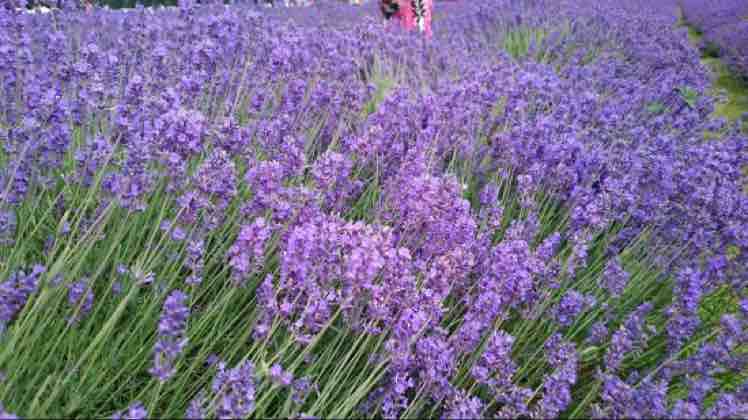 | ESSENTIAL OIL ₹2500 Essential oil View product → |
 | ESSENTIAL OIL ₹1800 COA OF LAVENDER OIL ----------------------------------------------------------------------------------------------- TEST SPECIFICATION RESULT... View product → |
Frequently asked questions
Which botanical details should you specify when buying lavender oil?
Specify the Lavandula species, plant part, growing region, harvest year and whether the oil was distilled from controlled or purchased botanical material.
What should an industrial lavender oil RFQ include?
State the required species, quality limits, testing documents, batch size, packaging, delivery schedule, export paperwork and continuity-of-supply requirements.
How do you check a delivered lavender oil batch?
Match the container and batch number to the COA, then review identity, density, refractive index, optical rotation, chromatographic profile and any required contaminant tests.
What should you assess in a Bengaluru lavender oil supplier?
Check whether the supplier controls or documents distillation, provides traceable batch records, uses suitable packaging, supports export documentation and can meet your volume and delivery schedule.
Related product
 | essential oil ₹2500 Natural & pure View product → |