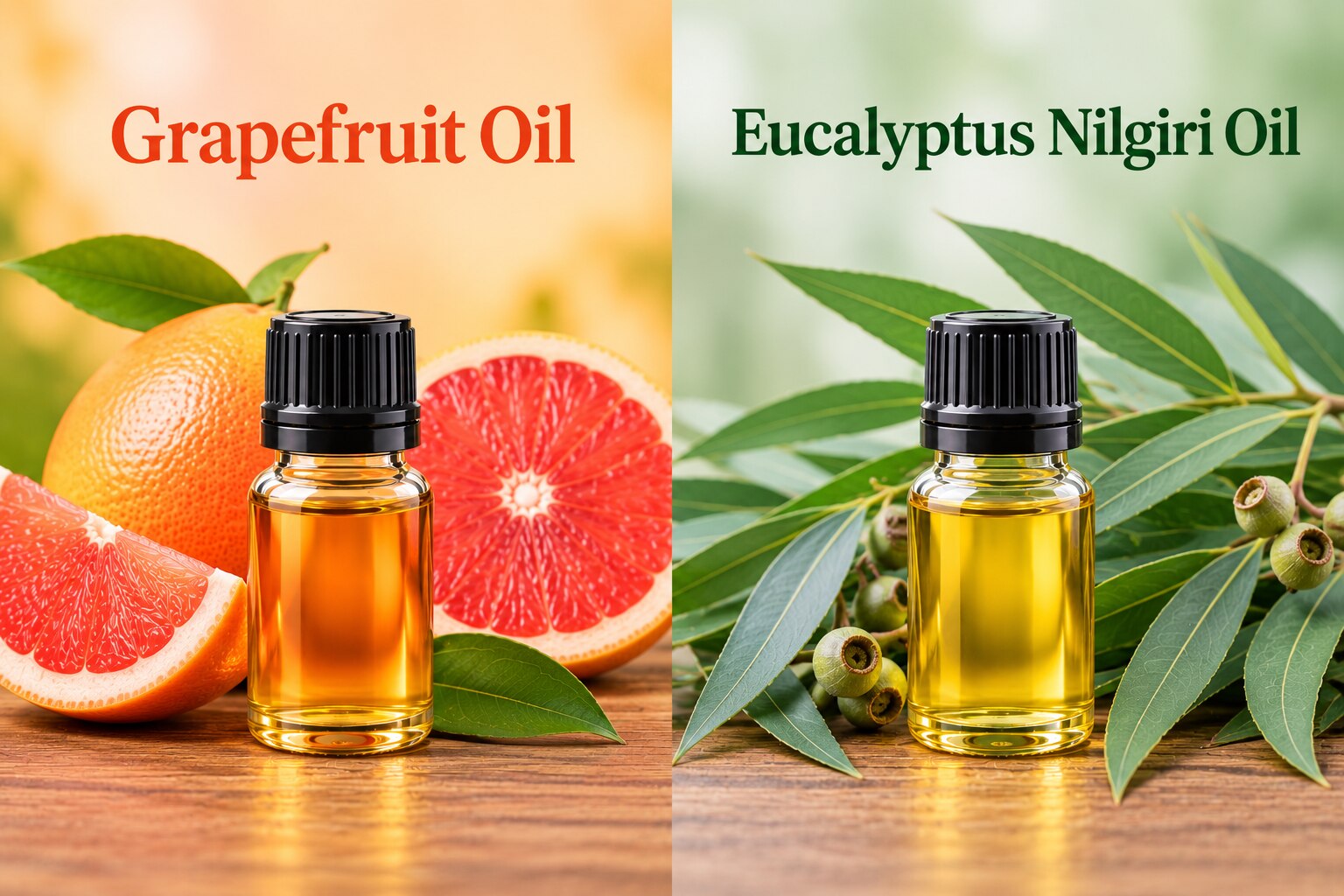
Grapefruit peel and eucalyptus leaves require different recovery methods, equipment and release tests, so the extraction route determines what the finished oil contains. By following each production stage and checking the right documents, you can compare authentic oils, identify unsuitable substitutions and specify material for your own formulation.
Key takeaways
- Use cold expression for grapefruit peel oil, then clarify and filter the batch.
- Use steam distillation for eucalyptus Nilgiri leaf oil production.
- Compare citrus pressing equipment with stainless-steel steam distillation vessels.
- Request COA, GC-MS profile, SDS, batch traceability, and intended-use test results.
How is grapefruit peel turned into a released oil batch?
A released grapefruit oil batch begins with selected fruit, not juice pulp. The peel contains the oil glands; cultivar, maturity, peel fraction and condition influence the final composition.
1. Select fruit by cultivar, maturity and soundness, then record the fruit lot. Wash it to remove soil and surface contamination before directing it to the juice line.
2. Separate and handle the peel promptly. Mechanical disruption of the peel releases oil, while integrated juice-line equipment recovers it during fruit breakdown and juice extraction. The pulp is not the primary oil source.
3. Recover the peel oil by cold expression or mechanical pressing. Avoid calling this material steam-distilled grapefruit oil: steam distillation is a different process that produces a different volatile profile.
4. Clarify the expressed emulsion by centrifugation, then pass it through a defined filter. Allow settling when required to remove remaining water and suspended solids.
5. Store the filtered oil in tightly closed, light-protective containers with limited headspace and controlled temperature. Limonene is usually the major constituent, but its batch result changes with cultivar, maturity, extraction conditions and processing; request a batch-specific GC-FID or GC-MS result.
6. Release the batch only after matching the fruit lot, extraction method, filtration record, appearance, odour and analytical results. Ask a grapefruit oil manufacturer for that chain of evidence, plus bergapten or total-furocoumarin results when the oil is intended for leave-on products.
What are the eucalyptus Nilgiri oil production steps?
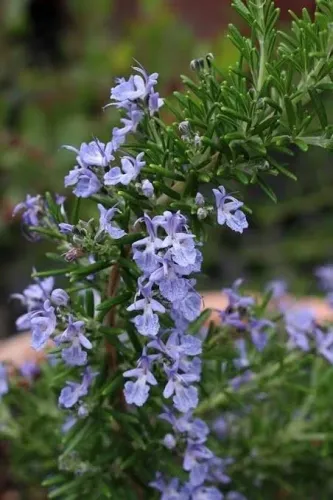
Confirm the Latin species and plant part before buying eucalyptus nilgiri oil for production: cineole-type material is associated with Eucalyptus globulus and related species, while Eucalyptus citriodora is citronellal-rich lemon eucalyptus.
Record the harvest lot and move fresh leaves to the still with minimal transport delay; controlled wilting reduces excess moisture without allowing fermentation or excessive drying.
- Inspect leaves for mould, dirt and excessive branches, then record their condition and moisture.
- Load the still evenly without overpacking; a tight charge causes steam-channeling and uneven recovery.
- Apply steam through the leaf bed. Steam carries volatile constituents into the condenser, where vapour becomes liquid.
- Collect the condensate and separate the oil layer from the hydrosol in a Florentine separator.
- Filter the oil or let it settle, then remove remaining water by controlled drying.
- Store the dry oil in closed, light-protective containers, and fill only the released batch after recording recovered mass and analytical results.
| Species | Dominant commercial character | Procurement consequence |
|---|---|---|
| Eucalyptus globulus | Cineole-type | Verify 1,8-cineole by batch analysis |
| Related cineole-rich species | Cineole-type | State the exact Latin species |
| Eucalyptus citriodora | Citronellal-rich | Do not substitute for cineole-type oil |
Soaking leaves in solvent produces an extract, not steam-distilled oil. Blending isolated cineole into a carrier produces a formulated or standardized material, not Nilgiri oil from a leaf still.
Why are grapefruit and eucalyptus oils made with different equipment?
The equipment follows the feedstock. Grapefruit oil manufacture uses citrus peel-expression equipment because accessible oil glands release a fresh, limonene-rich oil without heating; heat can alter that volatile profile. The eucalyptus oil production process uses a steam distillation still because steam carries volatile leaf constituents into a condenser.
| Material | Main equipment | Process purpose |
|---|---|---|
| Grapefruit peel | Peel disruptor, expression or pressing unit, centrifuge, filter and storage tank | Releases peel oil, removes juice and solids, then clarifies it without steam |
| Eucalyptus leaves | Steam lines, still, condenser, Florentine separator, filter and storage tank | Vapourises leaf constituents, condenses them, separates oil from hydrosol and protects the finished oil |
Control the Latin raw-material identity, peel or leaf freshness, moisture and loading density. Overpacked eucalyptus leaves cause steam-channeling; leaks, poor condenser performance, incorrect steam pressure or temperature, and excessive distillation time change recovery and composition. Set separation temperature, filtration grade and storage conditions to limit water, particles and oxidation.
Crude first-distillation eucalyptus oil is not equivalent to rectified or redistilled oil, which can show higher 1,8-cineole after heavier constituents are removed. A blended or cineole-standardized material may contain added isolated cineole. Require that status on the batch record, alongside condenser results, recovered mass and oxidation controls.
Which quality checks prove the oil is suitable for its intended use?
A batch passes only when its test results match the specification for its end use, not when it merely smells strong. Compare colour and odour with the approved reference, then review the following records.
| Oil | Identity checks | Use-specific risks |
|---|---|---|
| Grapefruit | Relative density, refractive index, optical rotation where applicable, and a batch GC-FID or GC-MS profile | Expressed oil may contain furanocoumarins, including bergapten |
| Eucalyptus Nilgiri | Relative density, refractive index, optical rotation where applicable, and a batch GC-FID or GC-MS profile | Confirm cineole-type material, not citronellal-rich Eucalyptus citriodora |
- Request residue on evaporation, acid value or peroxide value when relevant, adulterant screening, and comparison with previous approved batches.
- Treat “high limonene” and “cineole-rich” as marketing descriptions. A batch-specific chromatogram shows the full profile, detects dilution or isolated-constituent blending, and exposes drift between lots.
- For expressed grapefruit oil used in leave-on products, specify a bergapten limit or total-furocoumarin limit and require the reported result.
- For eucalyptus nilgiri oil for production sold as IP or BP, name the exact IP or BP monograph. Require its identity and assay tests plus a certificate of analysis stating compliance; general commercial oil is not equivalent.
- Add allergen, pesticide, heavy-metal, residual-solvent and microbiological documents when the formulation, regulation or customer standard requires them.
How should you choose a Nilgiri oil supplier for production?
Choose the specification before choosing the supplier. Your procurement checklist should state:
- Latin species and plant part: Eucalyptus globulus leaves, not “Nilgiri” alone
- Chemotype or compositional range, with lot-specific 1,8-cineole by GC
- Crude first-distillation, rectified, redistilled, blended or cineole-standardized status
- Odour profile, end-use grade, allergen declaration and finished-product compatibility
- IP/BP monograph, if pharmaceutical use applies, plus pesticide, heavy-metal and residual-solvent limits
Eucalyptus citriodora is citronellal-rich lemon eucalyptus, not a substitute for cineole-type oil.
| Evidence | Acceptable record | Warning sign |
|---|---|---|
| Traceability | Botanical source, leaf lot, charge weight, still ID, steam conditions, time, recovered mass | “Manufacturer” with no still record |
| Quality control | COA, SDS, GC chromatogram, retained sample and controlled revisions | One generic COA for every batch |
| Site control | Cleaning log, storage record and filling evidence | Unexplained relabelling or blending |
For grapefruit oil, define amber or opaque packaging, low headspace, sealed closures, storage below your validated temperature, maximum age and peroxide or oxidation limit; limonene oxidises under heat, light and oxygen.
Assess a bulk nilgiri oil supplier on these records, not geography. Shanti Aromatics is worth evaluating against them, including its claim as an eucalyptus nilgiri oil manufacturer in Bengaluru, rather than accepting location or “grapefruit oil manufacturer” as proof.
Related product
 | ESSENTIAL OIL ₹1200 We are manufactured of eucalyptus oil IP /Bp MOQ : 25 kg View product → |
Frequently asked questions
How is grapefruit peel turned into a released oil batch?
Selected grapefruit peels are cleaned, reduced in size, and processed through cold expression or another citrus-peel extraction system. The expressed emulsion is separated, clarified, filtered, tested, and released against specifications for composition, appearance, odour, density, refractive index, and intended use.
What are the eucalyptus Nilgiri oil production steps?
Producers receive and inspect eucalyptus leaves, load them into a steam-distillation vessel, condense the vapour, separate the oil from hydrosol, dry and filter the oil, then test and pack the approved batch. The distillation record should identify the leaf lot, process conditions, yield, and batch number.
Why are grapefruit and eucalyptus oils made with different equipment?
Grapefruit oil is held in peel oil glands and is commonly recovered through cold expression, emulsion separation, and filtration. Eucalyptus oil is contained in leaf tissue and is commonly recovered by steam distillation using a boiler, still, condenser, and oil separator.
Which quality checks prove the oil is suitable for its intended use?
Review identity and composition by GC-MS, then check appearance, odour, relative density, refractive index, optical rotation where relevant, water, and foreign matter. Match the results to the application, allergen and contaminant requirements, SDS, COA, and customer specification.
How should you choose a Nilgiri oil supplier for production?
Ask a bulk Nilgiri oil supplier for a representative sample, recent COA, GC-MS chromatogram, SDS, batch traceability, botanical name, plant part, extraction method, packaging details, and retained-sample policy. Confirm that the supplier can reproduce the agreed specification at your required volume.